
A work order is the bridge between a requested task and getting paid for it. Whether you are dispatching a service tech for a repair or assigning Time and Materials (T&M) work on a larger site, a formal work order ensures everyone knows exactly what needs to be done.
Download our free, printable work order templates below to start tracking your labor and materials accurately.

Understanding Work Orders
A construction work order is an internal or external document that authorizes a specific task to be completed. It provides the field crew with the scope of work and gives them a place to log the exact labor hours and materials used to complete that task, ensuring that accounting can bill the client accurately.
Key Information to Include
To ensure you don't lose money on unbilled labor, every work order must include:
- Detailed Scope: Exactly what needs to be fixed or installed.
- Labor Tracking: A section for the crew to log the date, worker names, and total hours spent on the task.
- Material Tracking: A log of every part or material used to complete the job.
- Authorization: A signature from the superintendent (or the client, if it is T&M work) approving the logged hours and materials.
✨ Benefits of Digital Tracking
Managing work orders digitally eliminates the "lost paperwork" problem that plagues service contractors:
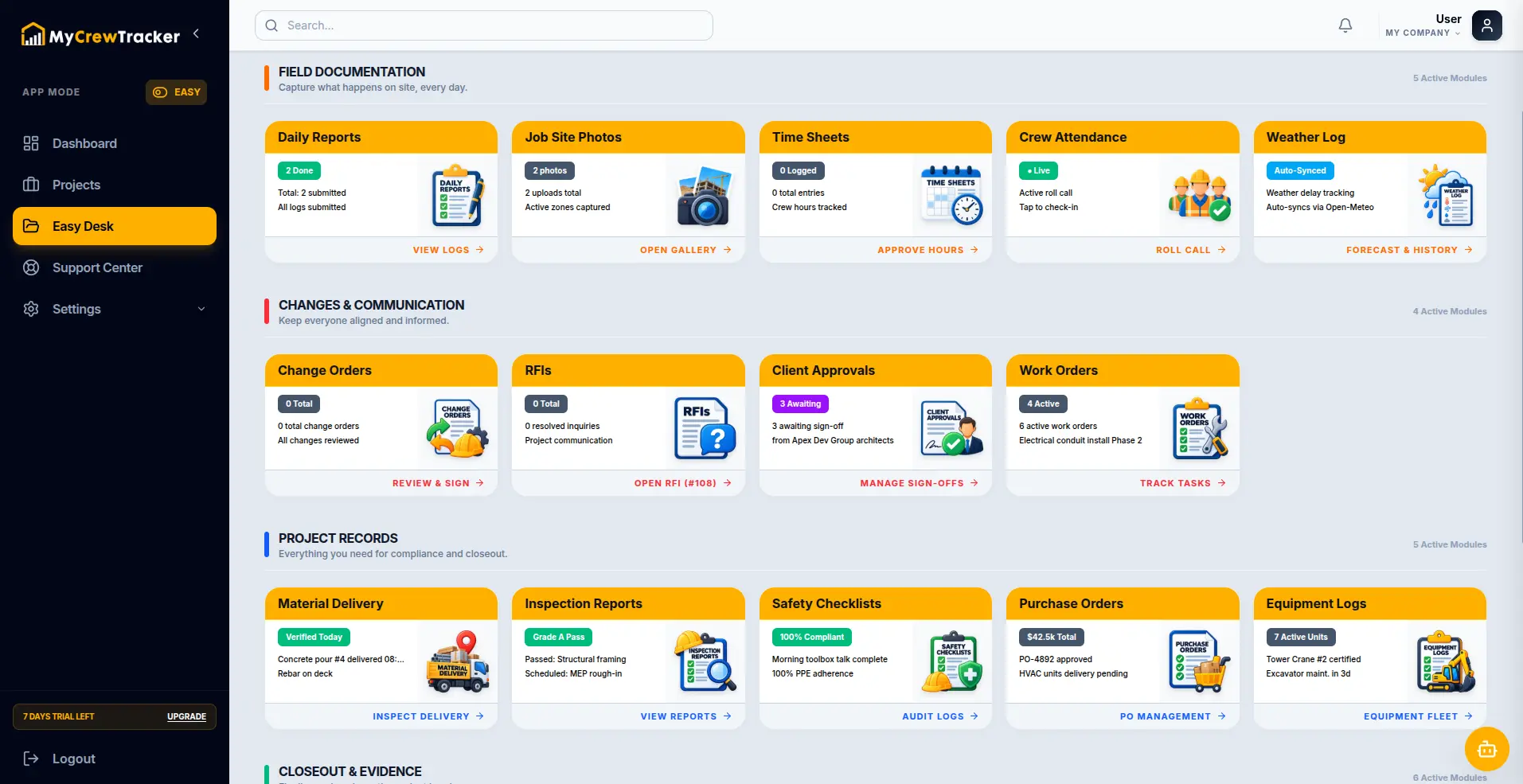
- Real-Time Dispatch: Office staff can create a work order and push it instantly to a field worker's phone.
- Accurate Time Tracking: Workers can clock in and out of specific work orders digitally, ensuring time sheets are perfectly accurate.
- Faster Invoicing: As soon as the field worker marks the work order complete and gets a digital signature, accounting can instantly generate an invoice.
Best Practices & Workflow
Get Signatures Daily for T&M Work
If you are performing Time and Materials (T&M) work based on a work order, do not wait until the end of the week to get the client or general contractor to sign off on the hours. Have them sign the work order at the end of every single shift. Memories fade, and clients will dispute hours if they don't sign them daily.
Download Templates
 Download PDF Template
 Download Excel Form
❓ Frequently Asked Questions
What is the difference between a Work Order and a Change Order?
A Change Order is a formal amendment to the original contract that changes the overall scope, price, or schedule. A Work Order is an operational document used to assign a specific task to a crew and track the labor/materials used for that task. (Sometimes, a signed Change Order will generate a Work Order for the crew to actually execute the new work).
What is a T&M Work Order?
A T&M (Time and Materials) work order is used when the final cost of a task is unknown. The contractor charges for the actual hours worked and the actual materials used, plus an agreed-upon markup. It requires meticulous daily tracking and sign-offs.