
A solid daily report is your best defense against construction disputes, unpaid change orders, and schedule delays. It serves as the official historical record of exactly what happened on the job site every single day.
Download our free, professional daily report templates below, or read our guide on how to document your site activities effectively to protect your bottom line.

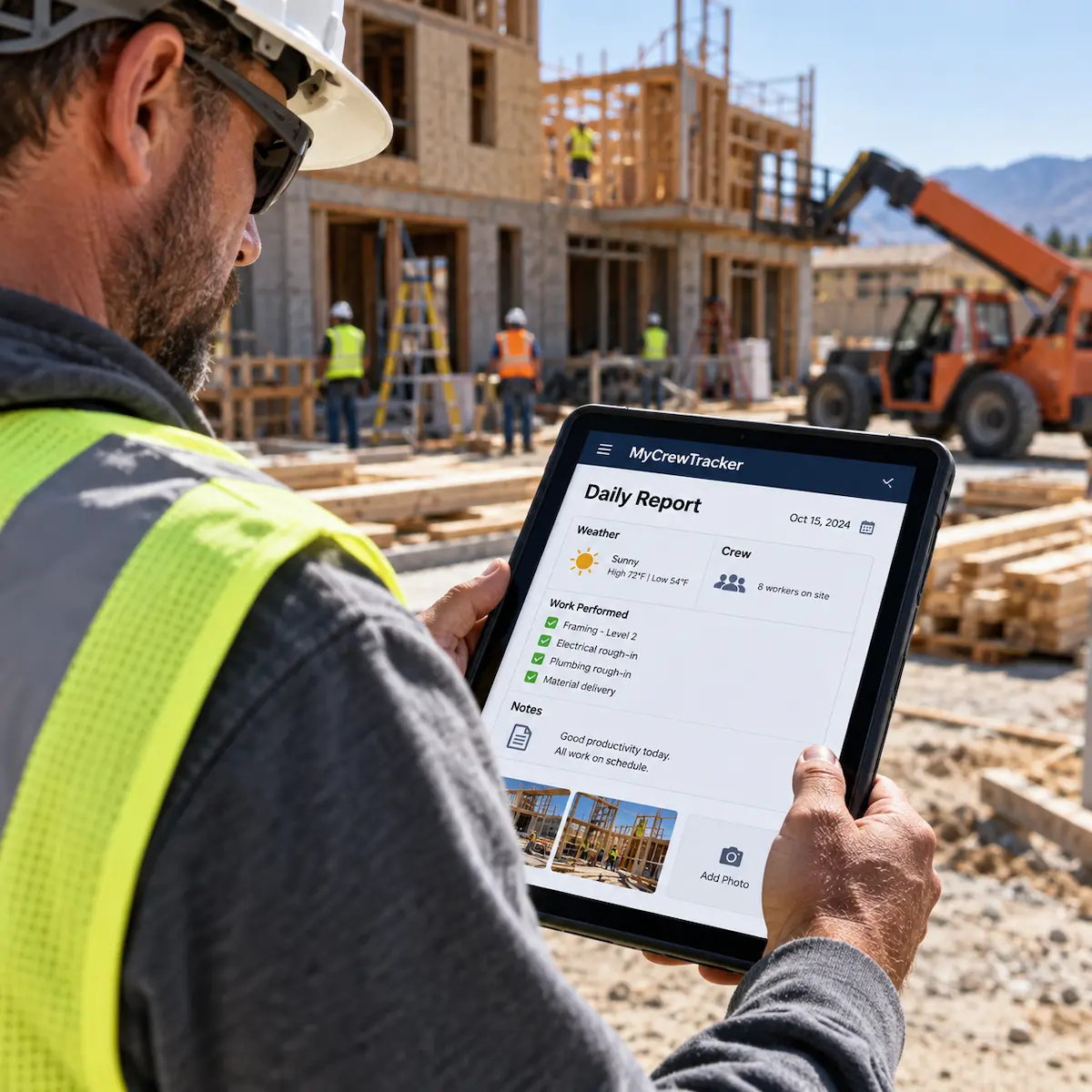
Understanding Construction Daily Reports
The primary purpose of a construction daily report (or daily log) is to create a factual, continuous timeline of a project. If a subcontractor claims they were delayed by your crew, or if an owner refuses to grant a schedule extension for severe weather, your daily reports are the first documents requested in arbitration or court.
Beyond legal protection, daily reports give off-site project managers and stakeholders a clear picture of job progress, ensuring that the schedule remains on track and immediate issues are escalated before they become expensive problems.
Key Information to Include
To be effective, every construction daily report must capture the following details without fail:
- Date & Weather Conditions: Crucial for justifying weather-related schedule delays or explaining poor productivity (e.g., pouring concrete in extreme heat).
- Crew Size & Trades: Document exactly who was on site (own crew and subcontractors) and how many workers were present.
- Work Performed: Detailed notes on what specific progress was made and in what areas of the building/site.
- Equipment Usage: What heavy machinery was active, idle, or broken down.
- Delays or Obstacles: Note any missing materials, design conflicts, or site access issues immediately.
- Safety Incidents: Document any accidents, near-misses, or safety inspections that occurred.
✨ Benefits of Digital Tracking
Moving from a paper clipboard to a digital daily reporting system solves the biggest problem with daily logs: actually getting them filled out.
- Voice-to-Text: Superintendents can dictate their notes directly into their phones while walking the site, rather than typing long paragraphs at the end of an exhausting day.
- Automatic Weather Data: Digital apps pull in historical weather data automatically based on the site's GPS location.
- Instant Photo Attachments: Snap a picture of an issue and attach it directly to that day's log. No more digging through a messy camera roll three weeks later.
- Cloud Backup: Paper logs get lost, ruined by coffee, or trapped in a foreman's truck. Digital logs are instantly searchable by the back office.
Best Practices & Workflow
Best Practices for the Field
Submit daily reports before leaving the job site while the information is fresh. Do not wait until Friday afternoon to write reports for the entire week; you will forget critical details that could cost the company money.
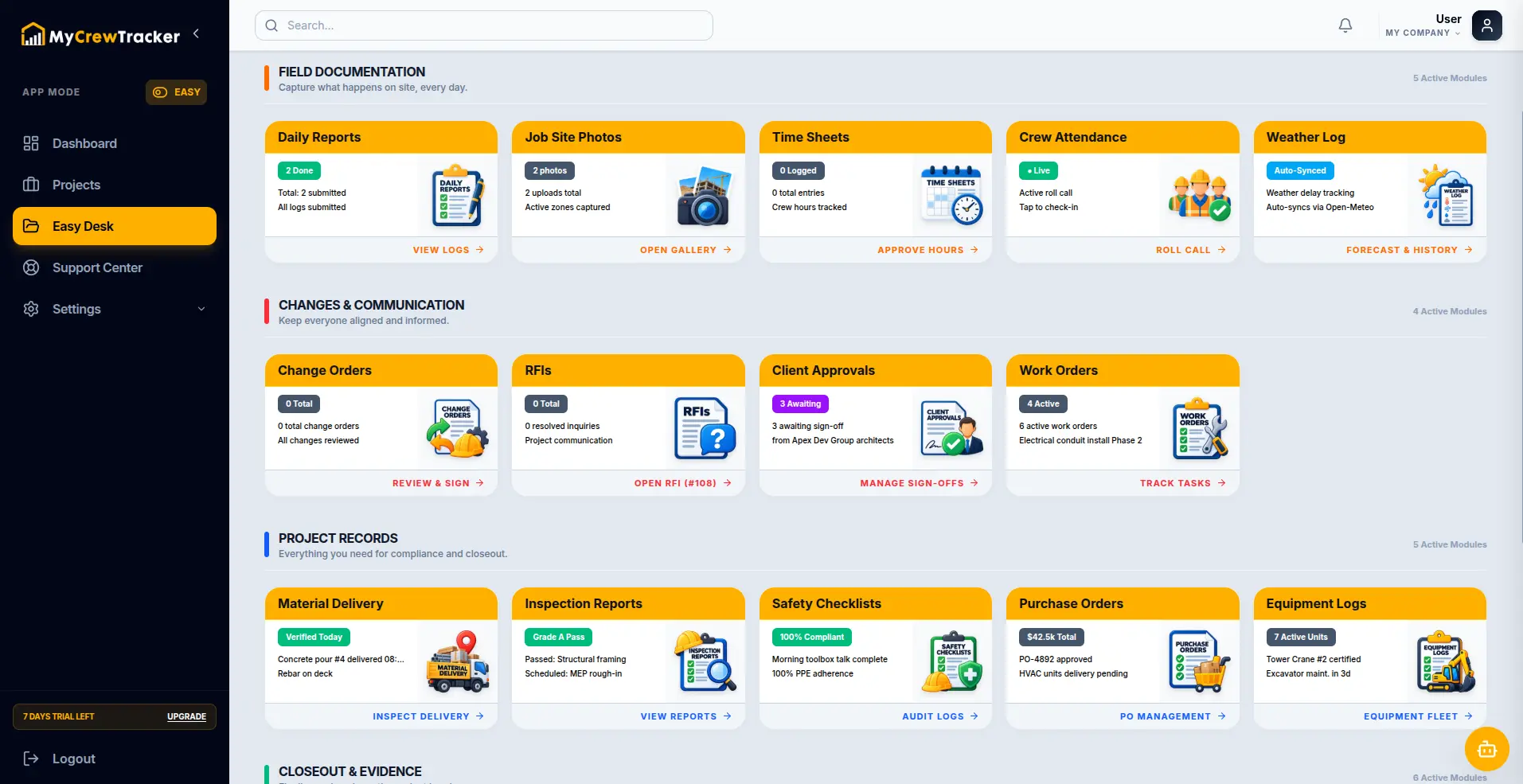
Include crew time sheets and labor hours as part of each report, and attach job site photos directly to provide visual proof of progress and issues. Record your weather log entries at the start and end of each shift — weather documentation is critical for justifying delays.
Download Templates
 Download PDF Template
 Download Excel Log
❓ Frequently Asked Questions
Who should fill out the construction daily report?
Typically, the Site Superintendent, Foreman, or Project Manager is responsible for filling out the daily report. It must be completed by someone physically present on the job site who has an accurate overview of all trades and activities taking place that day.
What happens if you miss a day on the daily log?
Missing a day breaks the continuous chain of documentation. In a legal dispute, opposing counsel will point to missing days to argue that your record-keeping is unreliable, which can weaken your position when claiming schedule extensions or fighting unfair back-charges.
Are digital daily reports legally binding?
Yes. Digital daily reports, especially those with timestamped signatures and uneditable revision histories, are generally accepted in court and arbitration as official business records, often carrying more weight than easily altered paper documents.