
Failed inspections cause massive schedule delays and expensive rework. The only way to guarantee you pass a municipal inspection is to conduct your own rigorous internal inspections first.
Download our free site inspection report templates below to standardize your quality control (QC) process.

Understanding Inspection Reports
Inspection reports document the quality and compliance of work performed, identifying deficiencies that need correction before the next phase of construction begins.
Key Information to Include
- Inspection Type: E.g., framing, electrical rough-in, pre-drywall.
- Pass/Fail Status: Clear indication of acceptability.
- Deficiency List: Specific items requiring rework.
- Photographic Evidence: Visual documentation of issues.
✨ Benefits of Digital Tracking
- Higher Quality Work: Catching mistakes early improves the final product.
- Fewer Failed City Inspections: Pre-inspecting ensures readiness for municipal checks.
- Efficient Closeout: Helps catch issues early before they end up on the final punch list.
Best Practices & Workflow
Create standardized checklists for different phases of construction to ensure consistency, and integrate them with your daily safety checklists.
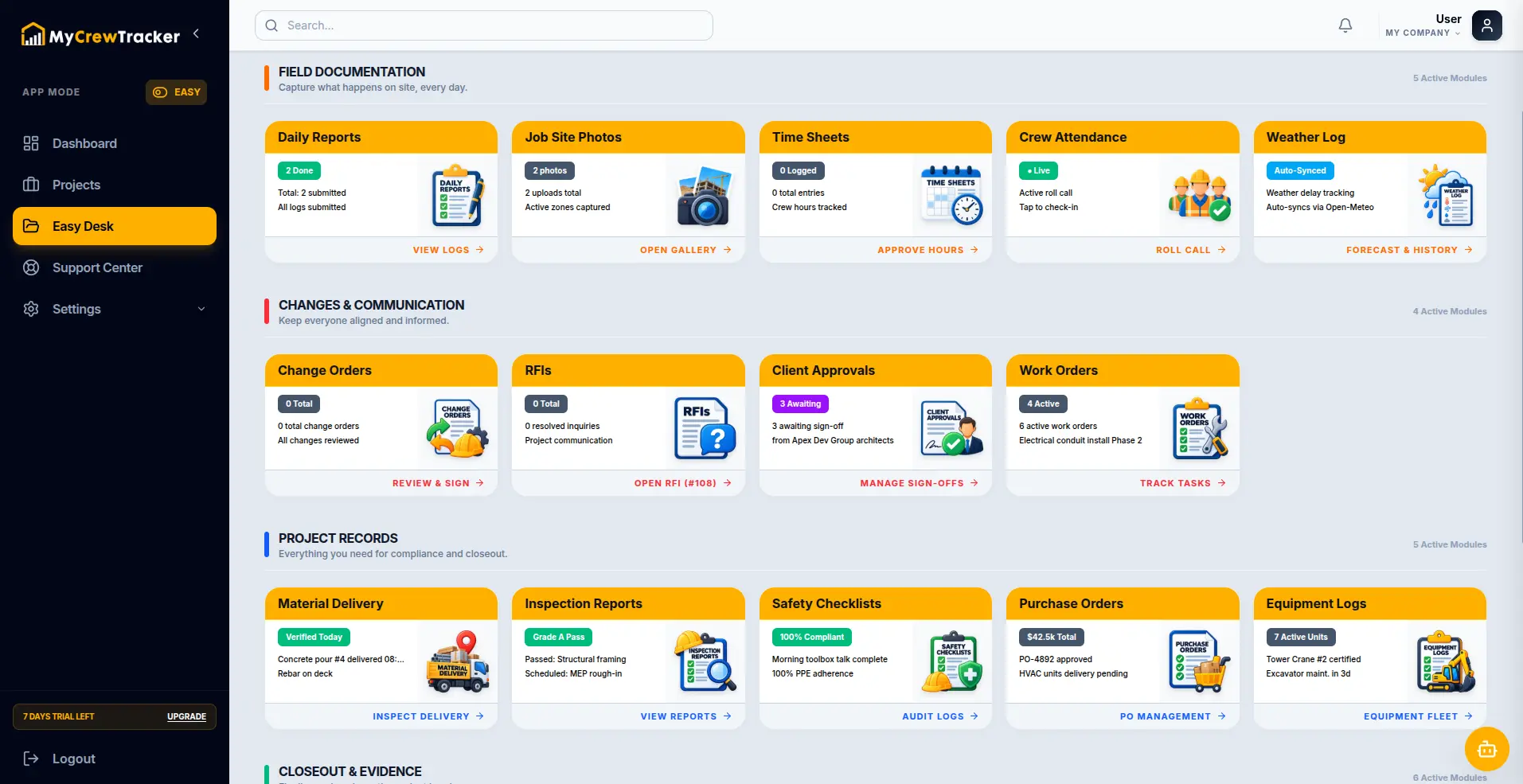
Download Templates
 Download PDF Template
 Download Excel Log
❓ Frequently Asked Questions
What is the difference between QC and QA in construction?
Quality Assurance (QA) is the process or system put in place to prevent defects (like requiring a specific inspection checklist). Quality Control (QC) is the actual act of fulfilling that process (physically inspecting the work and filling out the checklist).