
Job site safety is not just about OSHA compliance; it's about ensuring every member of your crew goes home to their family at the end of the day. Consistent safety inspections also protect your company from massive fines and skyrocketing insurance premiums.
Download our free, printable daily safety checklist templates below to start standardizing your site inspections immediately.

Understanding Safety Checklists
A construction safety checklist is a proactive tool used by site supervisors or safety officers to identify, document, and mitigate hazards before an accident occurs. It serves as documented proof that the contractor is actively enforcing safety standards, which is critical during an OSHA inspection or in the event of a worker's compensation claim.
Key Information to Include
A comprehensive safety checklist should cover the most common hazards (OSHA's "Fatal Four"):
- Personal Protective Equipment (PPE): Are hard hats, safety glasses, and high-visibility vests being worn by all personnel?
- Fall Protection: Are guardrails secure? Are workers tying off when working at heights?
- Scaffolding & Ladders: Are scaffolds erected on solid footing? Are ladders tied off?
- Electrical & Trenching: Are extension cords free of cuts? Are trenches properly sloped or shored?
- Housekeeping: Are walkways clear of debris to prevent trips and falls?
✨ Benefits of Digital Tracking
Paper checklists often end up pencil-whipped (filled out blindly without actually inspecting). Digital safety apps solve this:
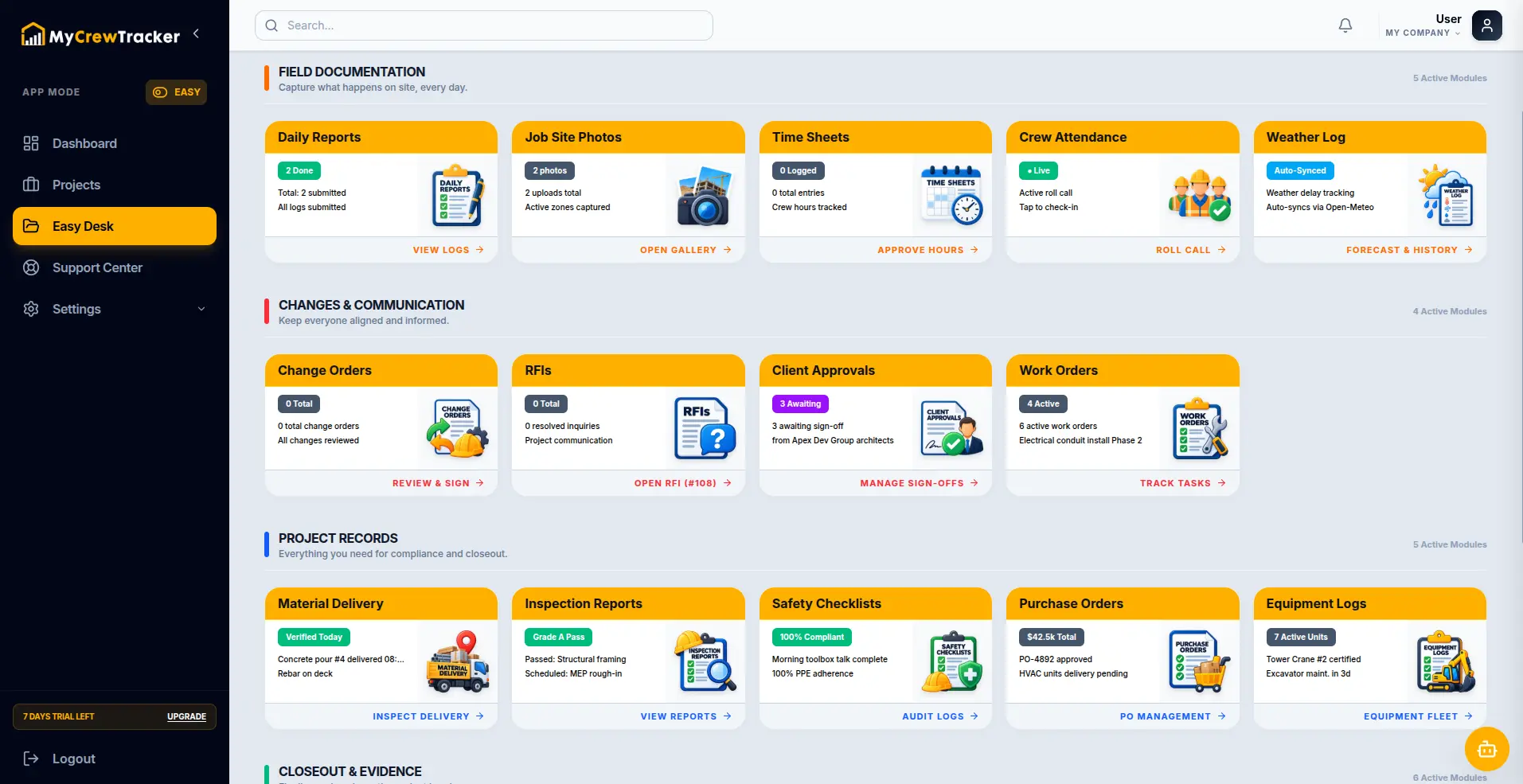
- Photo Evidence: Require the inspector to snap a photo of a hazard and the subsequent corrective action.
- Un-fudgeable Timestamps: Digital systems log exactly when and where the inspection occurred, proving to OSHA that your inspections are legitimate and timely.
- Instant Alerts: If a critical safety failure is logged, an alert can be sent instantly to the Safety Director or Project Manager.
Best Practices & Workflow
Make Safety a Daily Habit
Don't just perform safety checks once a week. The site environment changes hourly. Conduct a brief safety walk every single morning. Many contractors integrate their safety checklist directly into their daily reports to ensure it gets done.
If you identify a hazard, do not just check "Fail" on the form. You must document the corrective action taken to fix it. A known, documented hazard that was left unfixed is a massive liability.
Download Templates
 Download PDF Template
 Download Excel Log
❓ Frequently Asked Questions
How often should a construction safety checklist be completed?
Best practice dictates that a general site safety checklist should be completed daily, usually in the morning before heavy work begins. Specialized inspections (like scaffolding or crane rigging) must be done prior to each use.
Are written safety checklists required by OSHA?
Yes, OSHA standard 1926.20(b)(2) requires employers to initiate and maintain programs that provide for "frequent and regular inspections of the job sites, materials, and equipment" by a competent person. Written or digital checklists are the best way to prove you are fulfilling this requirement.