
Losing track of subcontractor invoices leads directly to double-paying for work or exceeding your project budget. You need a centralized log to track exactly what has been billed versus what has been completed.
Download our free invoice record templates below to tighten your accounting controls.
Understanding Invoice Records
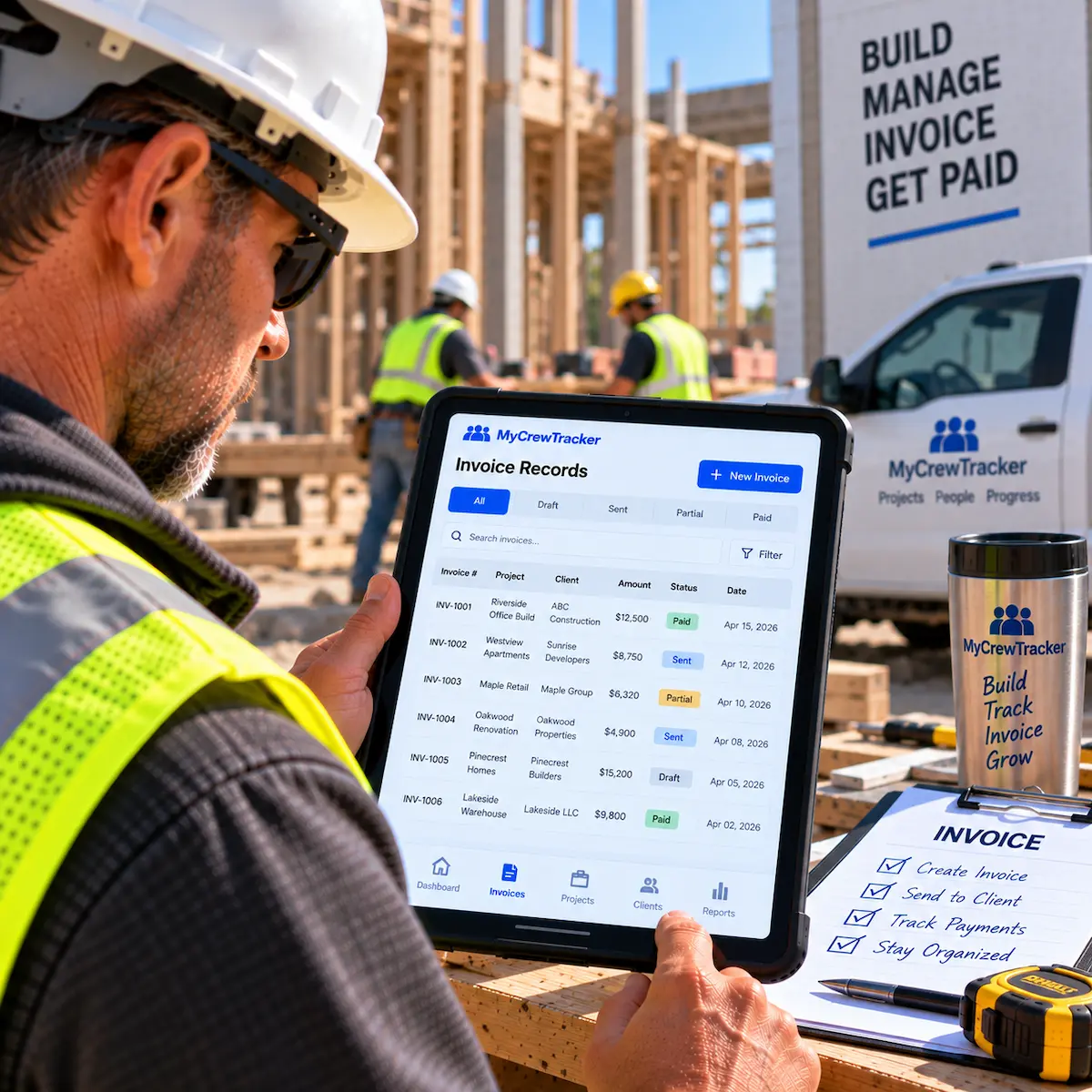
Invoice records track the lifecycle of billing on a project, from the initial draw request to final payment, ensuring no money slips through the cracks.
Key Information to Include
- Invoice Number & Date: Essential for tracking and aging.
- Schedule of Values: Breakdown of costs by project phase or trade.
- Amount Due & Retainage: Clear accounting of what is owed and what is held back.
- Payment Status: Draft, Sent, Partially Paid, or Paid.
✨ Benefits of Digital Tracking
- Improves Cash Flow: Organized tracking allows for timely follow-ups on past-due accounts.
- Prevents Underbilling: Ensures every approved change order makes it onto an invoice.
- Simplifies Taxes: Clean records make year-end accounting painless.
Best Practices & Workflow
Always tie invoices directly to completed work or a specific Schedule of Values. Include progress photos with your invoices to expedite client approval and payment.
Download Templates
 Download PDF Template
 Download Excel Log
❓ Frequently Asked Questions
What is retainage on a construction invoice?
Retainage is a portion of the agreed-upon contract price (usually 5% to 10%) deliberately withheld until the work is substantially complete to assure that the contractor or subcontractor will satisfy their obligations and complete the punch list.