


Understanding Construction Change Orders
A construction change order is a legally binding document that formally amends the original contract scope, price, or schedule. Change orders are typically triggered by unforeseen site conditions, client-requested upgrades, or design errors discovered via RFIs. The primary purpose of a change order is to ensure both the contractor and the client formally agree on the new costs and timeline *before* any extra work begins, preventing end-of-project payment disputes. Properly supporting your change orders with daily reports and job site photos is critical for swift approval.
Key Information to Include
If you are drafting your own change order documents in Word or Excel, ensure you include these critical fields to make it legally binding and clear:
Standard Change Order Form Structure
- Project Name & Address: _______________________
- Change Order Number: #_______ Date: _________
- Original Contract Date: _______________________
- Description of Change: (Detailed explanation of the new work, materials, and labor required.)
- Original Contract Sum: $___________
- Net Change by Previous Change Orders: $___________
- Cost of THIS Change Order: $___________ (Specify Add or Deduct)
- New Contract Sum (Including this CO): $___________
- Original Contract Time: _______ days
- Schedule Impact (Days Added/Subtracted): _______ days
- Signatures & Dates: (Contractor, Client, and Architect if applicable)
✨ Benefits of Digital Tracking
- Protects Profit Margins: Ensures you are paid for every piece of extra work.
- Prevents Schedule Disputes: Formally extends the deadline, protecting against delay penalties.
- Maintains Client Relationships: Clear upfront costs prevent end-of-project billing surprises.
Best Practices & Workflow
Change Order Request (COR) vs. Approved Change Order
A frequent point of confusion is the difference between a COR and a Change Order. A Change Order Request (COR) is simply a proposal. It is the contractor formally identifying a change in scope and submitting the estimated cost and schedule impact to the client or architect. An approved Change Order is the authorized change to the project's contracted scope, price, or schedule, subject to the project's contract and approval procedures.
The practical workflow typically looks like this: Change identified → Request documented (COR) → Pricing/Schedule impact assessed → Supporting documents attached (sometimes including a preceding Request for Information) → Submitted for client approval → Approved/Rejected → Final change tracked in the log.
Managing a Change Order Log
Having a solid template is great for one change, but what happens when you have 15 pending changes across three different projects? You need a Change Order Log.
A centralized log is essential for tracking identifiers (CO #), descriptions, statuses (Pending, Approved, Rejected), cost impacts, schedule impacts, and submission dates. A proper log provides a project-level view of your pending approvals and prevents unapproved work from slipping through the cracks. Once approved, these changes should seamlessly update your total project budget and document management hub.
Tired of managing Word docs and messy Excel logs?
Track your Change Orders and automatically capture digital signatures from the field with MyCrewTracker.
Start Your Free Trial →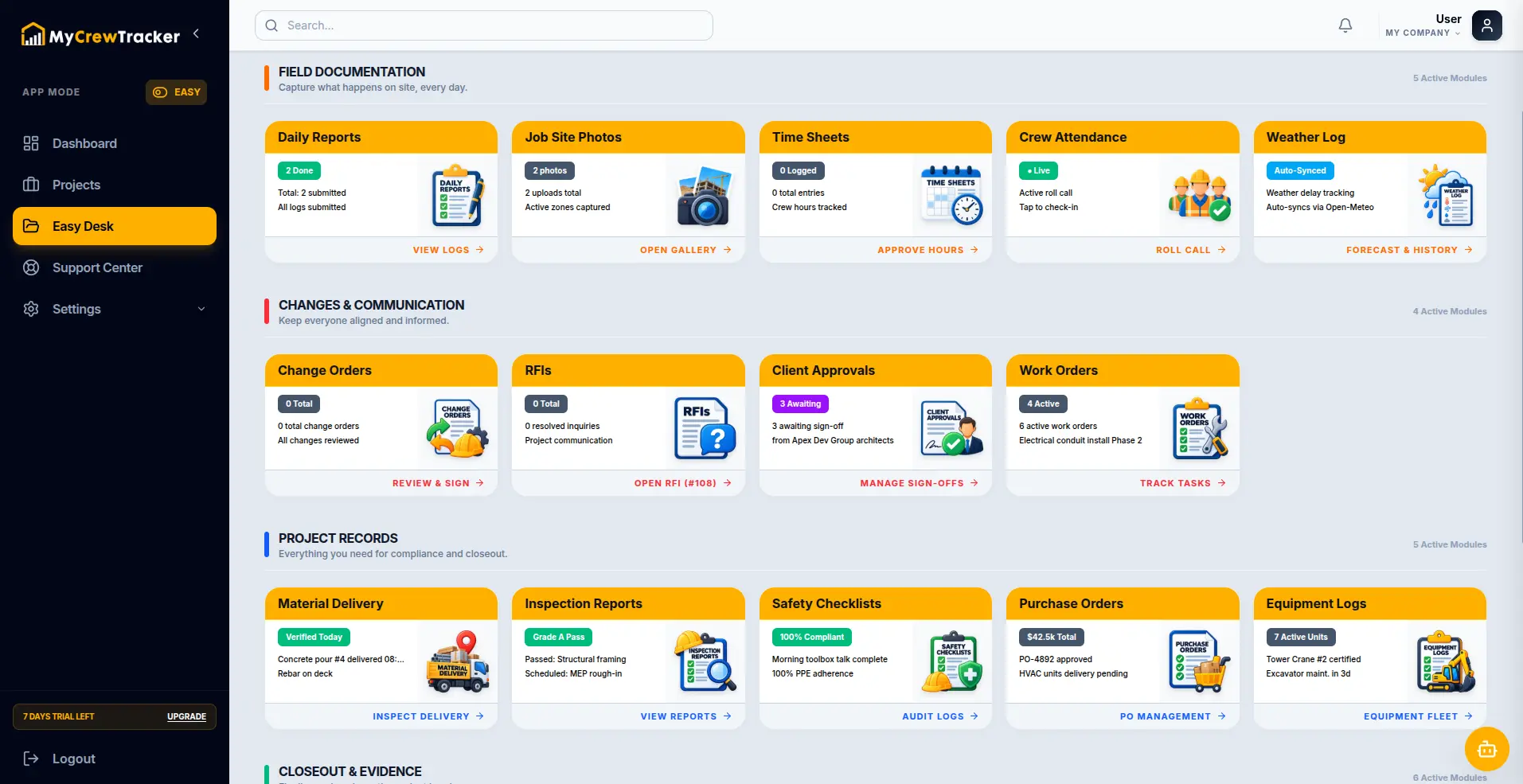
Download Templates
 Download PDF Template
 Download Excel Log
❓ Frequently Asked Questions
When should I issue a construction change order?
You should issue a change order anytime the client requests work outside the original contract scope, or when unforeseen site conditions (like hidden rock or bad soil) require extra labor, materials, or time.
Can work start before a change order is signed?
It is highly discouraged. Starting out-of-scope work without a formal signature puts the contractor at total financial risk if the client later disputes the cost.
What if the client refuses to sign the change order?
If a client refuses to sign, pause the out-of-scope work immediately. Refer to the dispute resolution clause in your main contract, and communicate clearly that the work cannot proceed without formal financial approval.
What is the difference between a Change Order Request and a Change Order?
A Change Order Request (COR) is a proposal submitted by the contractor outlining the expected cost and schedule impact of extra work. It only becomes a formal Change Order once it is signed and authorized by the required parties.
Can a change order affect the project schedule?
Yes, change orders frequently affect the project schedule. Contractors must explicitly document the number of additional days required to complete the extra work to avoid being penalized for delays.