
A few days of heavy rain can destroy a project schedule. Without meticulous documentation, you could end up paying steep liquidated damages for delays that were entirely out of your control.
Download our free construction weather log templates below, and learn how to properly document severe weather impacts to protect your schedule and budget.

Understanding Weather Log
The purpose of a dedicated construction weather log is to systematically record environmental conditions and, most importantly, their direct impact on the job site. Most construction contracts include clauses for "excusable delays" due to exceptionally adverse weather. However, to trigger these clauses and secure a schedule extension, the contractor bears the burden of proof.
A formal weather log provides the indisputable, day-by-day evidence required to submit a successful weather delay claim to the owner or architect.
Key Information to Include
A standard weather log must go beyond simply recording the temperature. It must include:
- Time of Day: Weather should be logged at least twice daily (e.g., morning arrival and midday).
- Temperature & Precipitation: Note the exact temperature, wind speed, and type of precipitation (rain, snow, sleet).
- Site Conditions: Is the site muddy? Are access roads flooded? Is there standing water in the trenches?
- Direct Impact: This is the most critical field. You must state why the weather stopped work (e.g., "High winds prevented crane operation," or "Mud prevented heavy equipment from accessing the site").
✨ Benefits of Digital Tracking
Using digital software to track your weather logs eliminates human error and saves time:
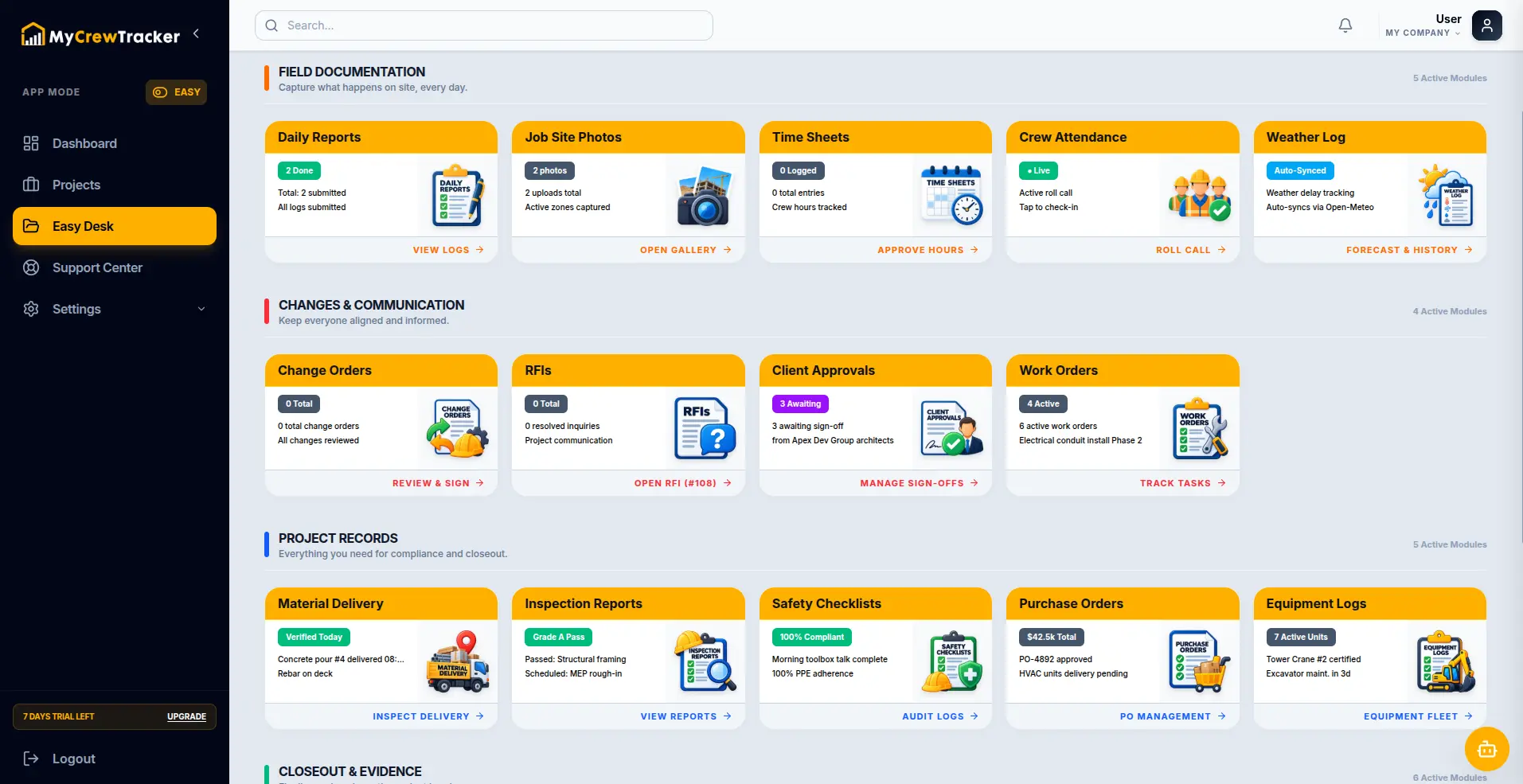
- Automated Data Entry: Modern construction apps automatically fetch temperature, humidity, and wind data based on your site's GPS coordinates.
- Aggregate Reporting: Easily export a report showing all 12 weather delay days in a specific month to attach to your schedule extension request.
- Historical Accuracy: Digital timestamps prove that the weather was recorded on the actual day, preventing accusations of "back-filling" data at the end of the month.
Best Practices & Workflow
Documenting the Impact
The biggest mistake contractors make is just recording the forecast. If it rains 2 inches on Sunday, Monday might be sunny, but the site could be too muddy for heavy equipment. The weather log for Monday must clearly state that the impact of Sunday's rain caused a lost day of work.
Always log weather twice a day. Don't just record the forecast; record the actual physical impact on the site, which is often attached as part of your daily reports.
Download Templates
 Download PDF Template
 Download Excel Log
❓ Frequently Asked Questions
Do I need a separate weather log if I track weather in my daily report?
While tracking weather in your daily report is standard, having a dedicated, aggregated weather log (or using software that can extract weather data into a single report) makes it significantly easier to compile a schedule extension claim at the end of the month. The architect will want to see all delayed days in one clean document.
What qualifies as an excusable weather delay?
Generally, contracts (like standard AIA agreements) require the weather to be "abnormal for the period of time" and it must directly prevent work on the critical path of the project schedule. Normal, expected seasonal rain typically does not qualify for a schedule extension.