
Heavy equipment is one of the largest expenses on any construction site. If you aren't tracking daily usage, fuel consumption, and preventative maintenance, your machinery is bleeding profit and heading for a catastrophic breakdown.
Download our free equipment log templates below, or read our guide on how to implement a bulletproof tracking system for your fleet.
Understanding Equipment Logs
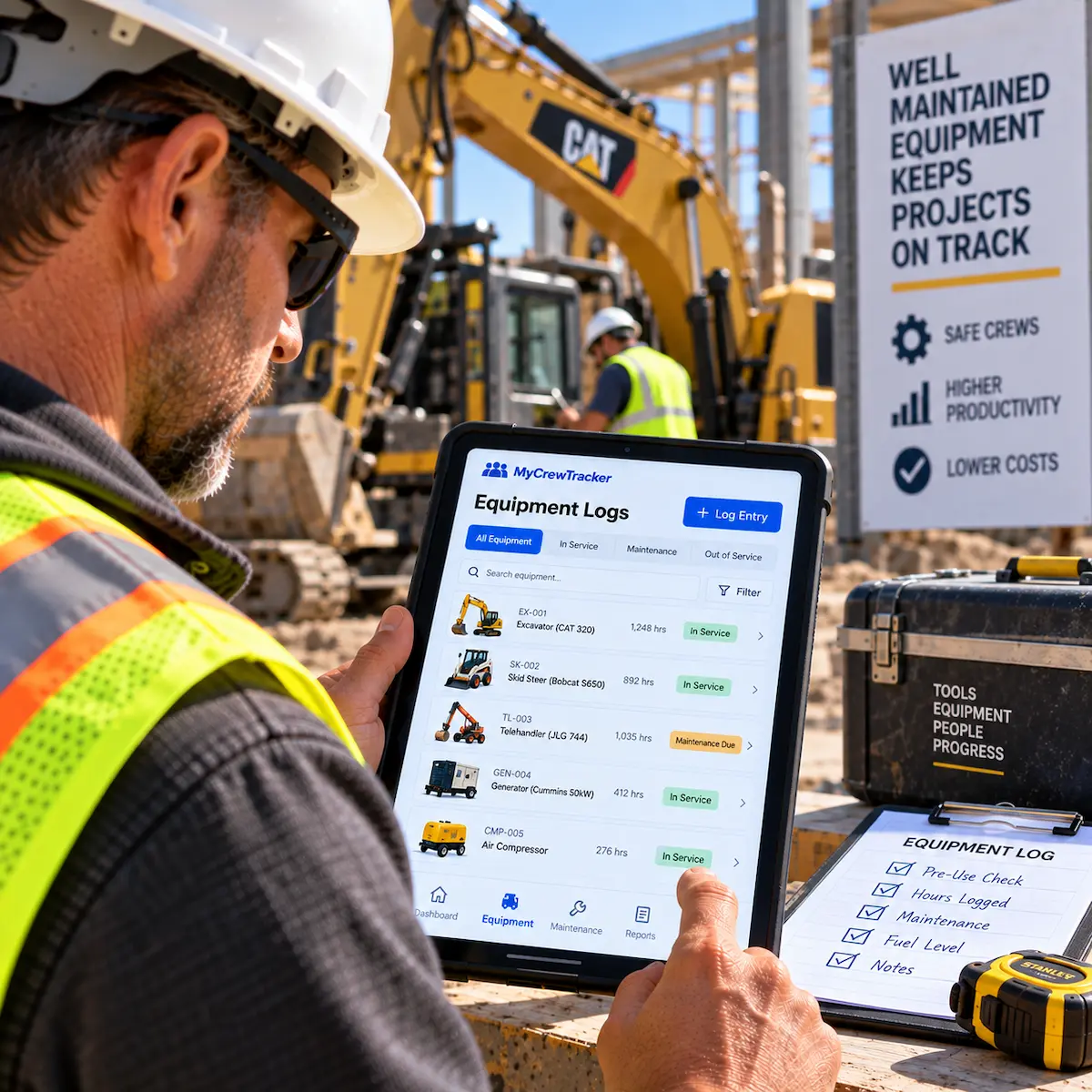
A construction equipment log is a daily record of machinery usage on a job site. It serves two primary purposes: Job Costing (allocating the cost of the machine's hours to the specific project) and Maintenance Tracking (ensuring oil changes and inspections happen on schedule to prevent downtime).
Key Information to Include
A proper equipment log must capture:
- Equipment ID: The specific machine being used (e.g., Excavator EX-04).
- Hours Used: Start and end meter readings.
- Fuel & Fluids: Gallons of fuel or DEF added.
- Maintenance Issues: A place for the operator to report strange noises, leaks, or required repairs.
✨ Benefits of Digital Tracking
Tracking equipment on paper is notoriously unreliable because operators forget to hand in the clipboards. Digital tracking solves this:
- Real-Time Alerts: If an operator flags a hydraulic leak on their phone, the fleet manager gets a push notification instantly.
- Automated Costing: Equipment hours are automatically multiplied by the machine's internal rate and applied to the project budget.
- Maintenance Reminders: Digital systems track total engine hours and automatically flag when a 500-hour service is due.
Best Practices & Workflow
Require a Pre-Shift Walkaround
Do not let an operator start an engine without performing a logged walkaround. Catching a frayed hydraulic line before a shift begins costs $50 to fix. Catching it after it blows and dumps 20 gallons of fluid onto a finished concrete slab costs thousands. Incorporate this walkaround into your daily reports.
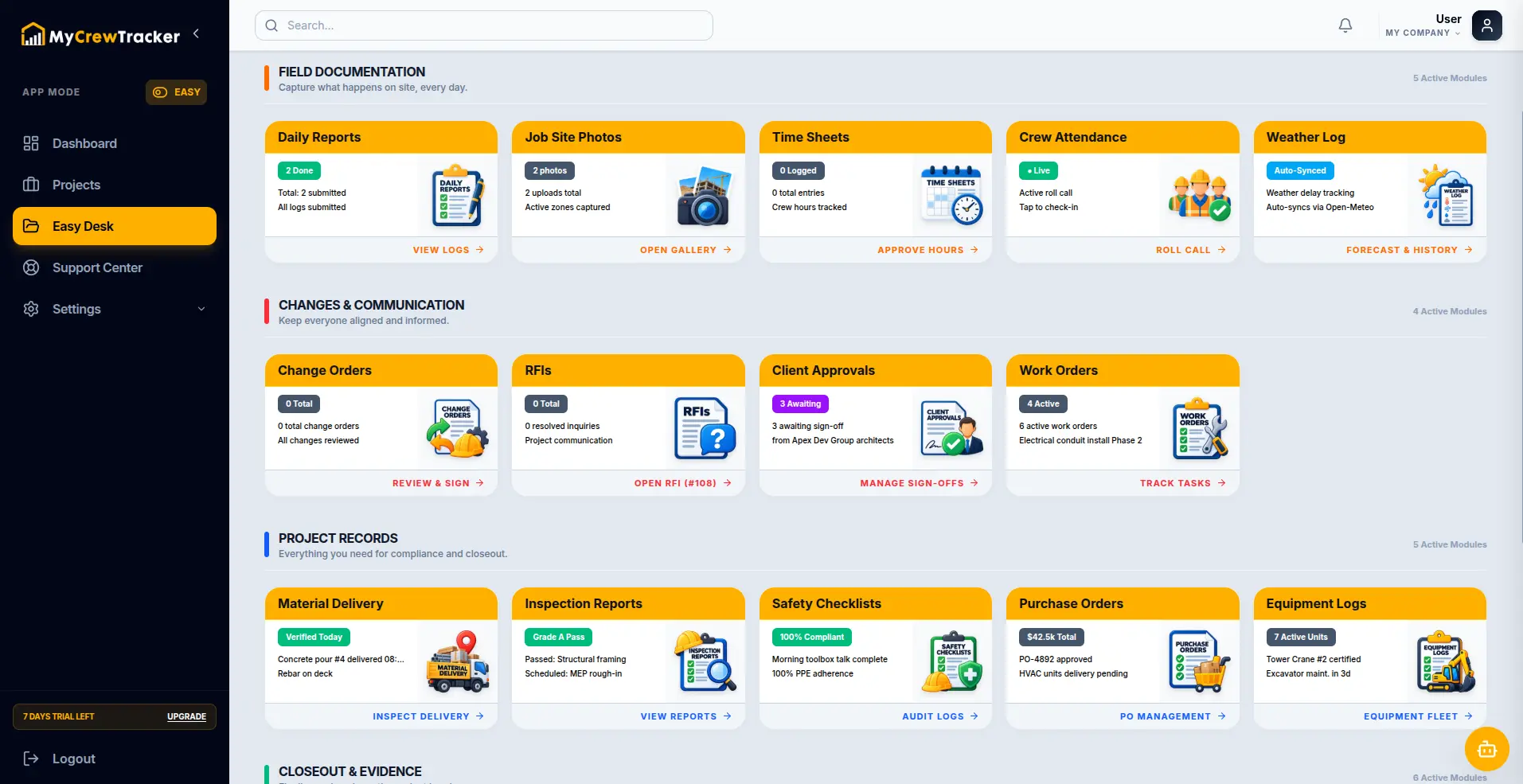
Download Templates
 Download PDF Template
 Download Excel Log
❓ Frequently Asked Questions
How do you calculate equipment costs for a construction project?
Equipment costs are calculated by determining an internal hourly rate (which includes ownership, depreciation, maintenance, and fuel costs) and multiplying it by the exact hours logged on the equipment tracker for that specific project.