It happens on almost every job.
The client walks the site on a Tuesday morning. They look at the framing, tilt their head, and say, "You know what? I think we should move that doorway two feet to the left. And while you're at it, can we add an extra outlet over there?"
Your foreman, wanting to keep the client happy and the job moving, says, "Sure, no problem. We can take care of that."
They just committed you to a verbal change order.
Three weeks later, when the final invoice includes an extra $1,200 for framing modifications, electrical rework, and schedule delays, the client balks. "I didn't know it was going to cost that much," they say. "I thought it was included."
Because there's no documentation, no signature, and no agreed-upon price, you end up eating the cost. You just paid for the privilege of doing extra work.
The Cost of the "Quick Favor"
In residential and small commercial construction, verbal change orders are the silent margin-killers. A $200 material run here, four extra hours of labor there—it all compounds.
When you don't document verbal requests immediately, you expose your business to three massive risks:
1. Unpaid Labor and Materials: You eat the direct costs of the change.
2. Schedule Delays: The extra work pushes back your other subs, causing a domino effect you can't bill for.
3. Client Disputes: The relationship sours because expectations regarding the final price weren't managed upfront.
To fix this, you need a rigid Standard Operating Procedure (SOP) that your entire crew follows every single time a client asks for a change.
The Official Verbal Change Order SOP
Make this mandatory for every foreman, superintendent, and crew lead on your team. No exceptions.
Step 1: The "Pens Down" Rule
When a client or architect requests a change verbally on the job site, all related work must stop immediately. Your foreman must explicitly state: "We can absolutely do that for you. Let me write up a quick change order so you know exactly how it impacts the price and schedule before we start."
Step 2: Draft the Field Change Order
The foreman immediately creates a Field Change Order (FCO). It doesn't need to be a complex, multi-page legal document, but it must include:
Step 3: Get the Signature On-Site
Do not wait to email the change order from the office that evening. Do not wait for the client to "review it later." If they are standing on the job site asking for the change, they need to sign for it right then and there.
Step 4: Distribute to the Team
Once signed, the document must be instantly shared with the back office (for billing) and the rest of the crew (so everyone knows the new scope of work).
The Old Way vs. The Better Way
The Old Way (Paper & Text Messages):
Your foreman writes the change on a scrap of lumber, a napkin, or a carbon-copy pad that gets lost under the seat of his truck. Or worse, he texts you, "Client wants the door moved," and you have to play phone tag with the client to get an official sign-off while the crew stands around waiting.
The MyCrewTracker Way:
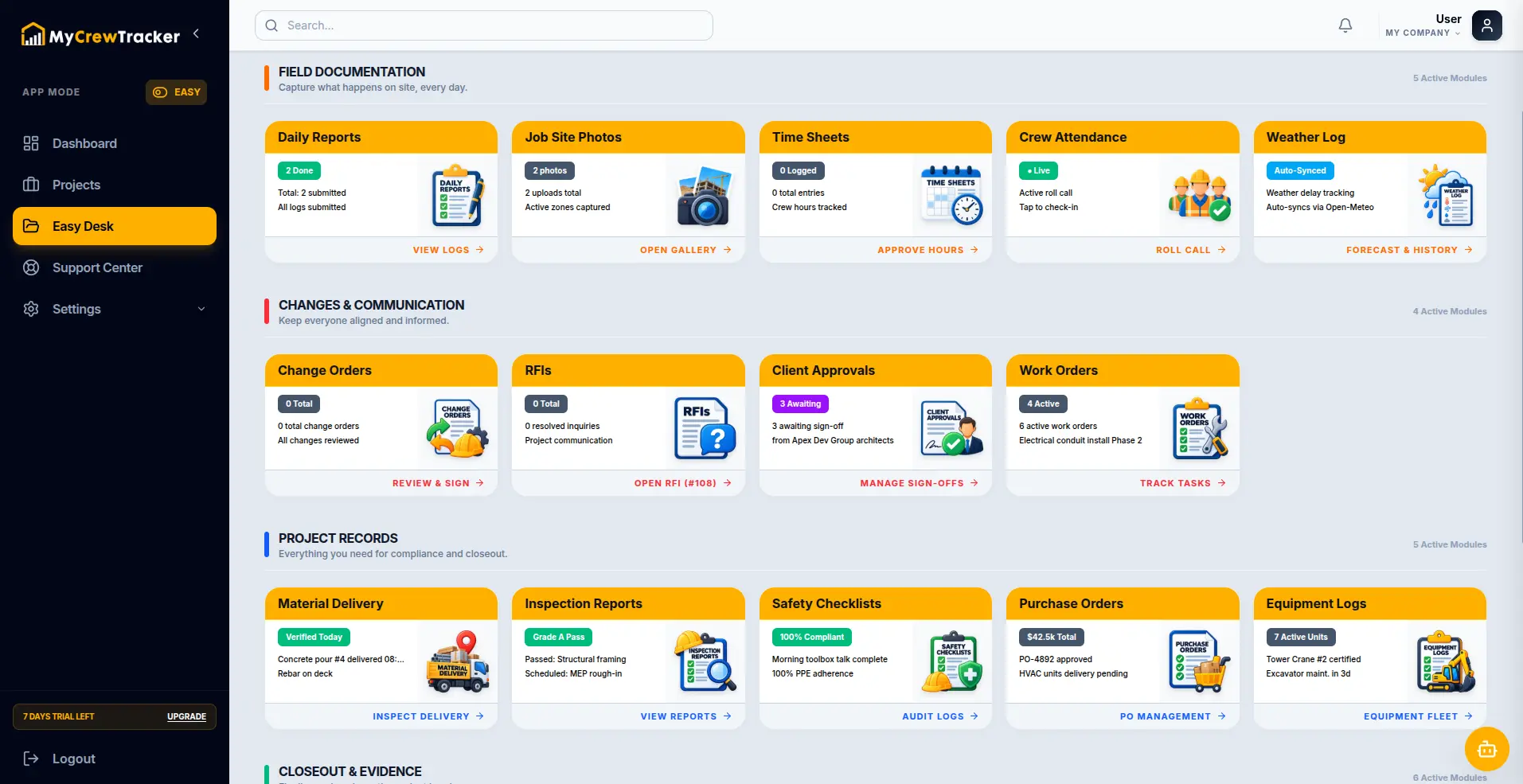
When the client asks for a change, your foreman pulls out his phone. He opens MyCrewTracker, creates a new Change Order, types in the new scope, and hands the phone to the client.
The client signs right on the screen with their finger. The moment they hit "Submit," a timestamped, legally binding PDF is instantly saved to the project file and emailed to the office. Total time: 45 seconds.
Get the Template
If you aren't using construction management software yet, you still need a standardized way to handle these requests. Don't rely on text messages.
You can download our free, professional Change Order Template to start protecting your margins today. Print a few copies, put them on a clipboard, and make sure they are in every foreman's truck by tomorrow morning.