It is the most frustrating moment in construction.
Your framers are flying. The schedule is tight. Then, they hit a wall—literally. The structural beam detailed on the architectural drawing clashes directly with the HVAC ductwork routing.
You do what you are supposed to do: you send an email to the architect asking for clarification (a Request for Information, or RFI).
Then, you wait. Two days pass. No answer. Your crew is standing around bleeding labor costs. You are faced with the ultimate contractor's dilemma: Do you stop work, ruin the schedule, and eat the cost of an idle crew? Or do you guess, build it the way you think is best, and risk getting back-charged $5,000 to rip it out when the architect finally replies?
The High Cost of Waiting
Unanswered RFIs are the leading cause of "invisible" schedule delays.
When RFIs live in messy email threads, text messages, and voicemails, the architect feels no urgency to reply. They are busy, and your question gets buried in their inbox. When a delay inevitably happens, the architect blames you for not "communicating clearly," and you end up eating the liquidated damages.
To protect your schedule and your profit, you need a Standard Operating Procedure (SOP) that forces accountability and gives you legal cover to keep moving.
The "Bulletproof RFI" SOP
Make this the mandatory standard for every Request for Information that leaves your job site.
Step 1: The "Proposed Solution" Rule
Never ask an open-ended question. If you ask an architect, "How should we frame this?", they will put it at the bottom of their pile because it requires them to solve a problem.
Step 2: Visual Evidence is Mandatory
Do not expect the architect to visualize the problem based on a text description.
Step 3: The "Proceed Default" Clause
You cannot pause a job indefinitely while waiting for an email.
Step 4: The Single Source of Truth
Never accept RFI answers via text message or a casual phone call.
The Old Way vs. The MyCrewTracker Way
The Old Way (Email Chaos):
You type out a long email to the architect. You forget to attach the photo. The architect replies three days later asking which floor you are talking about. You reply. They forward it to the engineer. Two weeks later, you finally get an answer, but by then, the drywallers have already hung the board, and you have to tear it down.
The MyCrewTracker Way:
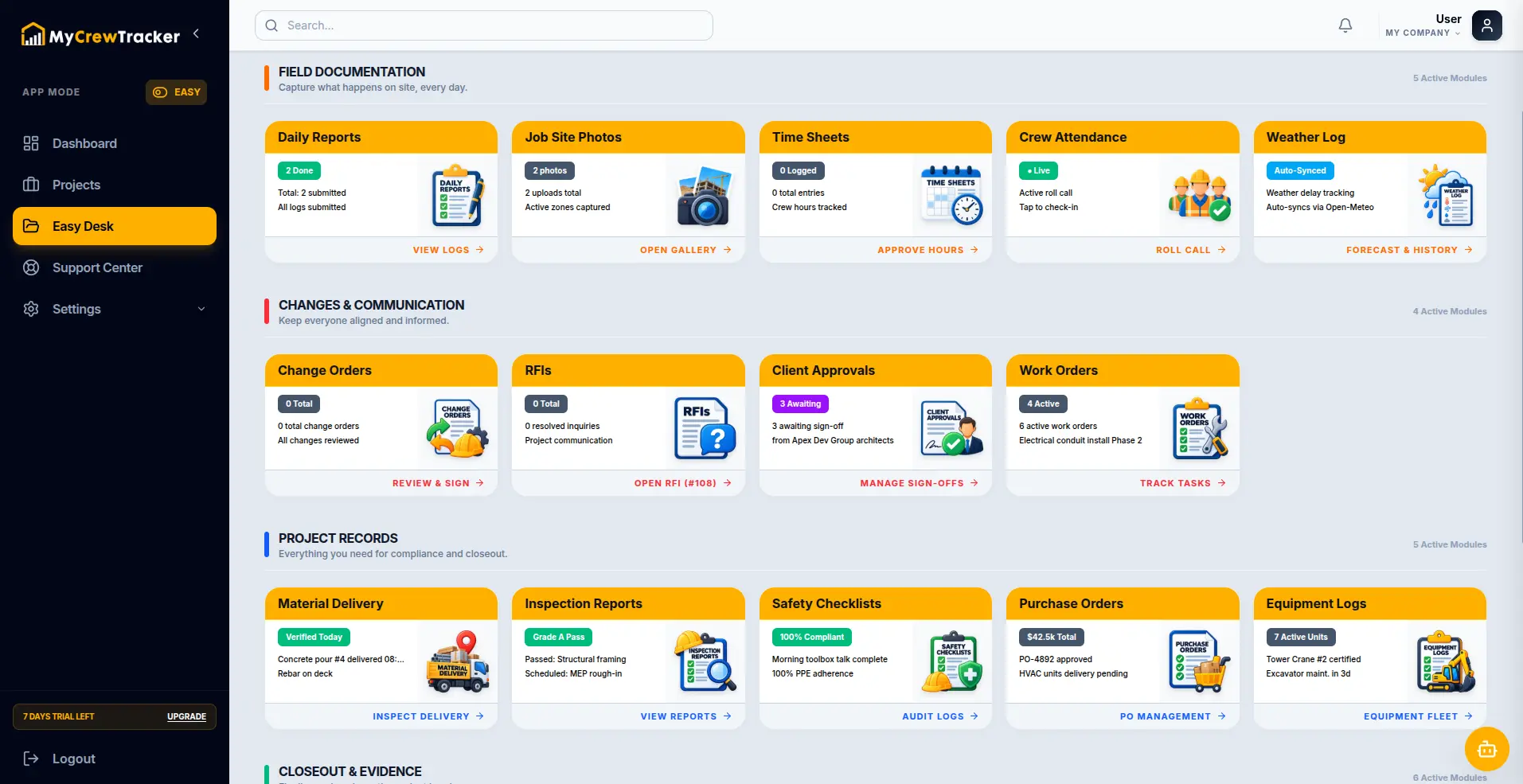
Your foreman encounters the clash. He opens MyCrewTracker, snaps a photo, types a quick proposed solution, and hits submit. The app instantly generates a formal PDF, logs it with a tracking number (e.g., RFI-004), and emails the architect with a big "Approve" or "Reject" button. If they don't reply in 48 hours, the system automatically sends them a reminder. When they hit "Approve," your foreman gets a notification on his phone, and the crew keeps working.
Get the Template
If you don't have a standardized, numbered RFI process, you are exposing your business to massive liability every time you deviate from the plans.
Download our free, professional Construction RFI Template. It includes the exact layout you need to propose solutions, attach photos, and force timely answers from design teams.