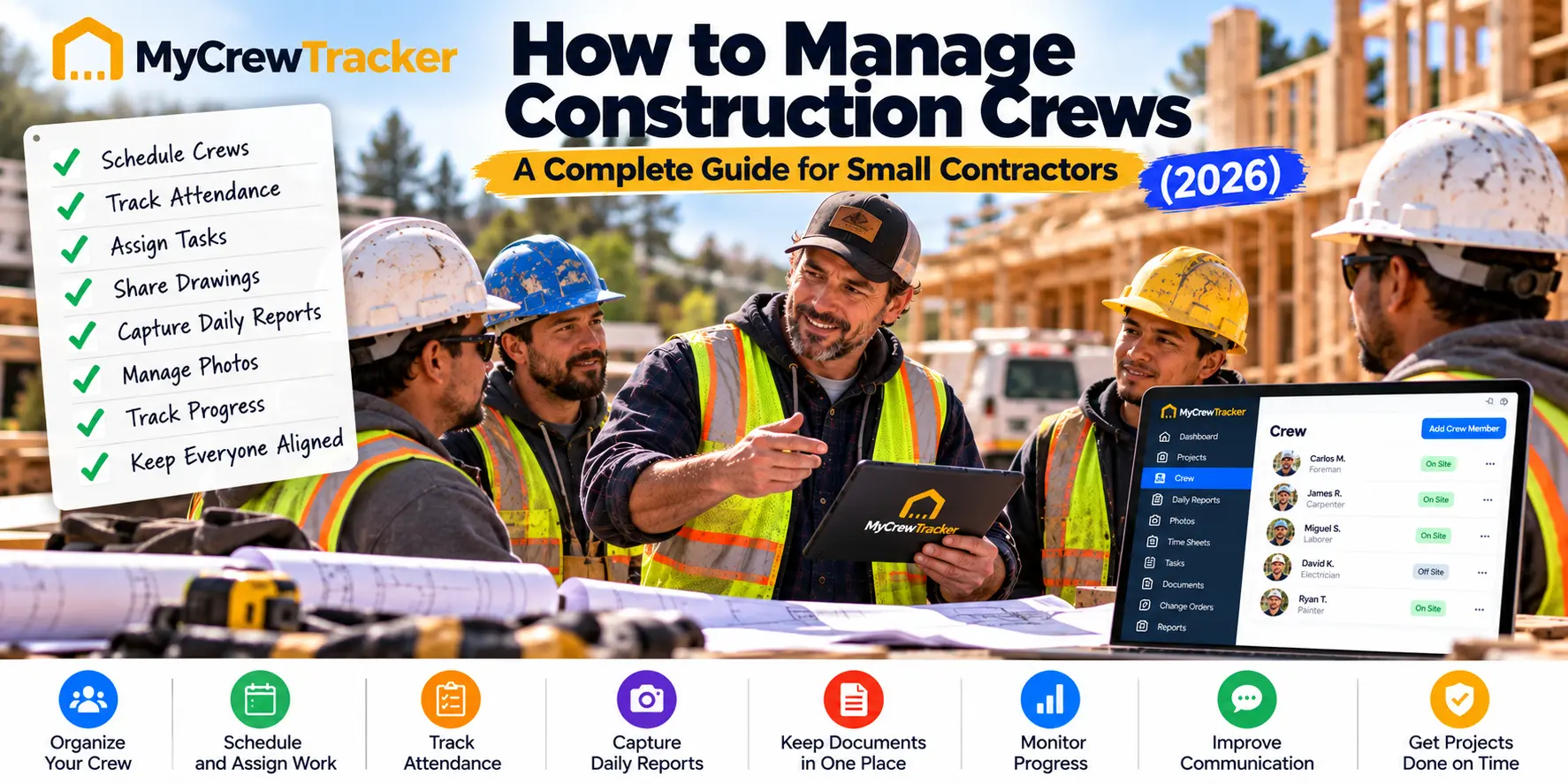
How to Manage Construction Crews: A Complete Guide for Small Contractors (2026)
If you're a small contractor, managing crews is the part of the job nobody trains you for. You started out as a skilled tradesperson—a carpenter, an electrician, a plumber—and suddenly you're responsible for scheduling, communication, conflict resolution, and keeping a dozen people productive on multiple job sites.
The stakes are higher than ever. The U.S. construction industry needs approximately 349,000 net new workers in 2026 just to keep pace with demand. Workforce shortages are now the leading cause of project delays, outpacing supply chain problems. With fewer workers available, every person on your crew matters more than ever.
The good news: managing crews effectively isn't about working harder. It's about building systems that make communication reliable, schedules predictable, and accountability the norm. This guide breaks down exactly how to do it—without burning yourself out or micromanaging your team.
The Real Cost of Poor Crew Management
Before diving into strategies, it's worth understanding what's actually at stake. When crews are managed poorly, the damage shows up in three places: time, money, and morale.
Roughly 35% of construction time is non-productive—spent waiting for approvals, searching for information, or chasing down colleagues. For a small contractor, that's more than a third of your labor budget evaporating into inefficiency.
Poor communication leads to errors, rework, and delays. Research shows that miscommunications can cause safety incidents, quality issues, and damaged working relationships. When information doesn't flow, crews either wait or guess—and both options cost money.
And then there's the "silo tax": fragmented information increases stress on project managers while crews lose time and motivation. Without real-time visibility, even the best teams are forced into reactive firefighting instead of proactive management.
The contractors who master crew management aren't just better organized. They're more profitable, more competitive, and more likely to retain their best people in a market where talent is scarce.
Strategy 1: Build Reliable Communication Systems
Most costly mistakes on a job site trace back to a communication breakdown—not a skills gap. The solution isn't more meetings. It's building communication systems that work consistently, day in and day out.
Hold Daily Morning and Evening Briefings
The single most effective communication practice for small crews is a daily rhythm of briefings. Meet in the morning to plan the day, and again in the evening to plan the next day.
Morning briefings are for alignment. The goal is to ensure everyone knows what they need to do that day, who is responsible for what, and what needs to be done before anyone leaves that afternoon. Keep it short—15 minutes maximum. Cover:
Daily tasks and the most critical items
Task owners for each assignment
Expected risks and delays
Equipment availability
Any last-minute changes to the plan
One contractor recommends including "two items that could potentially stop the team and one individual responsible for those two items" in every briefing. By providing the entire crew with the same plan by 7:30 a.m., accountability becomes a norm rather than an exception.
Evening briefings are for review. Ask: "What happened today?" Compare completed work against the plan, identify carryover tasks, report safety incidents, and confirm what's needed to be ready for tomorrow. Keep it under five minutes. Contractors who implemented evening check-ins reported freeing up 6 to 8 hours of management time per week by eliminating the need for field visits.
Define Jobs in Writing Before Work Starts
It's common for small contractors to discuss tasks verbally. This often turns out to be a mistake.
Trying to keep everything in your head means the owner becomes the scheduler, project manager, quality inspector, and problem solver simultaneously. That might work with one crew, but when multiple jobs run at once, it breaks down completely.
Document every job before work begins. Use a shared system that your crew can access from their phones. This eliminates the "I thought you said" conversations and creates a defensible record of what was agreed to.
Establish Clear Communication Channels
Every construction project needs a clear chain of command—and every worker needs to be aware of it. Decide upfront:
Who communicates what to whom
Which channels are used for which types of information (urgent vs. routine)
How decisions get documented and shared
Daily site meetings where the superintendent runs the briefing and forepersons for all trades are present are "incredibly effective because you have all the right people in the room to discuss any challenges".
Strategy 2: Master Crew Scheduling
Scheduling is where small contractors either win or lose. A well-scheduled crew is productive and motivated. A poorly scheduled crew wastes time, misses deadlines, and gets frustrated.
Use a Weekly Planning Rhythm
Don't try to schedule day-by-day. Use a one-week calendar view to plan ahead and see crew availability in real time. Assign crews to multi-day job appointments while preventing conflicts.
This weekly rhythm allows you to see bottlenecks before they happen, balance workload across jobs, and make adjustments when weather or material delays throw off the plan.
Match Skills to Tasks
Not every crew member can do every task. When building your schedule, consider:
Skills and certifications — who is qualified for which types of work
Availability — who is available when, factoring in travel time and site access constraints
Fatigue rules — avoid overloading your best people while others are underutilized
Smart scheduling means matching skilled workers to critical tasks and avoiding downtime by rotating teams based on workload intensity.
Assign Crew Leads for Accountability
Every crew should have a designated lead—a single point of accountability for that team's work. On a scheduling board, the crew lead should be clearly identified. This creates a clear leadership structure and streamlines communication.
Crew leads don't need to be managers. They need to be the person who knows what's happening on that job, can answer questions, and can escalate issues when needed. This frees you from being the bottleneck for every decision.
Strategy 3: Adopt Lean Construction Methods
Lean construction isn't just for large enterprises. The principles—reducing waste, improving flow, and empowering crews—work at any scale.
The Last Planner System
The Last Planner System encourages crews to map out tasks weekly, align commitments, and cut downtime. Instead of a top-down schedule that nobody follows, crews participate in planning their own work.
This approach works because the people doing the work often know best what's realistic. When they commit to a plan they helped create, they're more likely to follow through.
Daily Huddles
Pilot a short "daily huddle" at the start of shifts. Keep it under 10 minutes. Use it to review safety, flag bottlenecks, and realign crews.
Small rituals like this keep communication flowing and problems visible before they escalate. The huddle isn't a meeting—it's a check-in that keeps everyone aligned without eating into production time.
Competitive Tidiness
One counterintuitive productivity practice: keeping job sites clean and organized. The most productive construction sites practice a method that involves sorting (keeping only what's needed), setting in order (keeping resources in good condition), and standardizing (maintaining a visual standard everyone can understand).
A clean site is a safe site. And a safe site is a productive site. When crews aren't tripping over debris or searching for tools, they get more done.
Strategy 4: Build an Agile Workforce
Hiring more people isn't always realistic when demand outpaces supply. The alternative is building an agile workforce that can flex with changing conditions.
Cross-Train Your Crew
Train workers to flex between roles. Operators trained on multiple machines. Carpenters who can handle basic electrical work. Laborers who can step into equipment operation when needed.
Cross-training creates resilience. When someone calls in sick or a job needs extra hands, you're not scrambling. You also give your crew members new skills, which improves retention.
Look for Hidden Talent
An experienced carpenter may be eager to learn estimating or site safety. Developing those skills internally can save months of searching for new hires—and it signals to your crew that you're invested in their growth.
Create Swing Teams
Build "swing teams" of versatile workers you can shift quickly between sites. These teams handle overflow, cover for absences, and tackle short-duration tasks that don't justify a full crew assignment.
Strategy 5: Use Technology That Crews Actually Adopt
Technology is only useful if your crew uses it. And crews won't use tools that slow them down, confuse them, or require a training manual.
Digitize Documentation
The single most impactful technology investment for small contractors is digital documentation. When field teams can quickly log an issue, track material delivery, or upload photos of completed work, bottlenecks shrink and decisions accelerate.
This means:
Digital daily reports instead of paper forms
Mobile drawing access so crews always work from the current revision
Photo documentation organized by project and location
Digital RFIs and change orders that flow from field to office instantly
Real-time labor productivity tracking allows managers to see the moment a task is trending over budget or behind schedule and take corrective action immediately.
Choose Tools Built for Small Crews
The right platform for a small contractor has three characteristics:
Mobile-first design. If it doesn't work well on a phone, your crew won't use it.
Simple onboarding. You should be able to get your first project loaded in an afternoon, not a week.
Flat, transparent pricing. Per-user fees punish growth. Look for platforms that offer unlimited users at a predictable monthly rate.
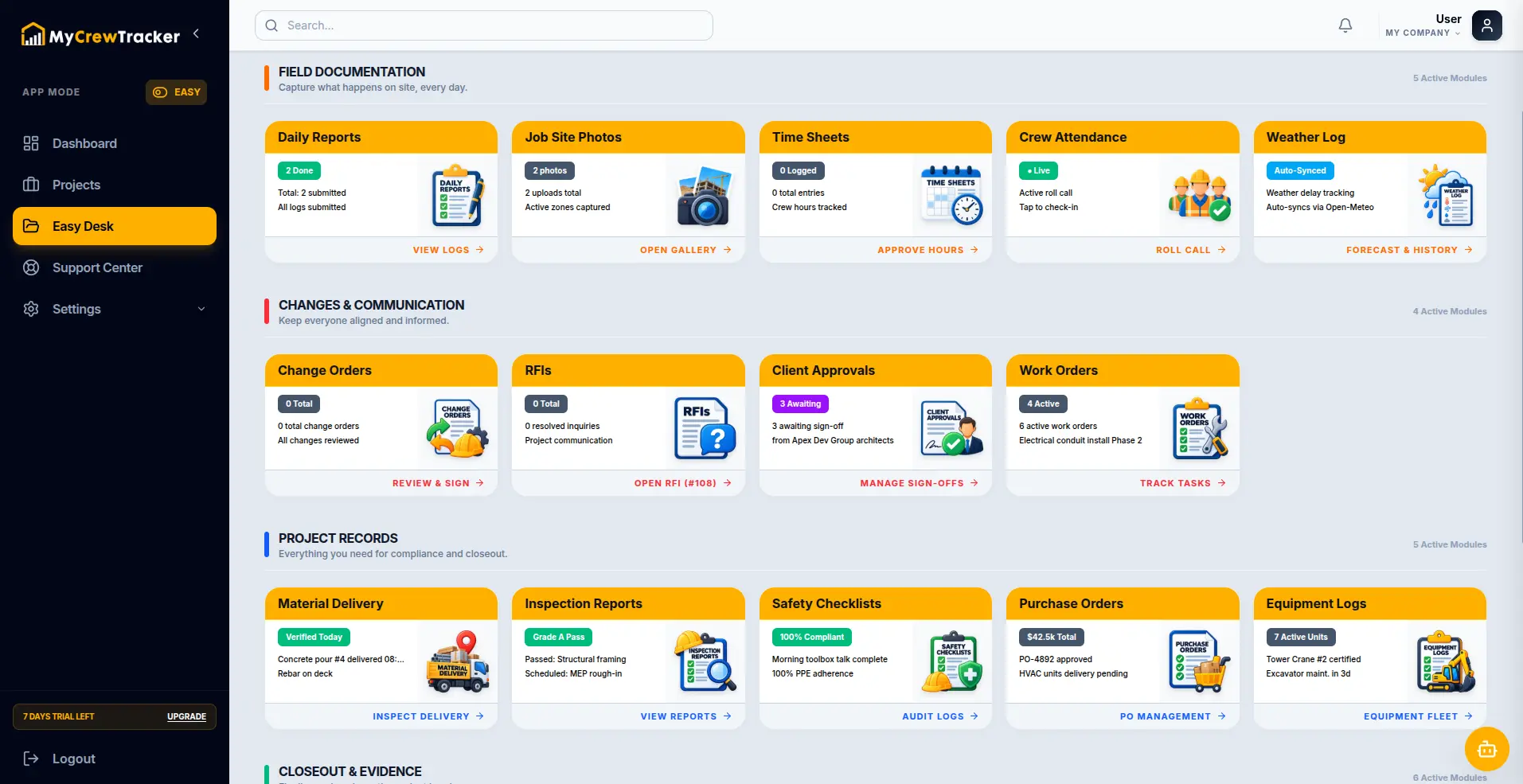
One platform that delivers all three is MyCrewTracker. At $40/month flat (billed annually), it includes unlimited projects, unlimited documents, and unlimited users—plus a Smart AI Assistant for documentation that lets you search your plans, specs, RFIs, and change orders in plain English.
For crew management specifically, MyCrewTracker includes:
Crew time sheets integrated with your project documents
Client approvals tracked chronologically to protect your profit
Change order management with pending review workflows
Punch lists with photo documentation
QuickBooks integration so your financial data stays in sync
The result is that your crew spends less time on paperwork and more time on productive work—and you have real-time visibility into what's happening on every job.
Strategy 6: Retain Your Best People
In a market where skilled labor is scarce, retention is as important as recruitment. Replacing a skilled crew member costs thousands of dollars in recruiting, training, and lost productivity.
Invest in Foremen Development
Develop foremen with operational awareness—not just technical skill. A great foreman knows how to read a schedule, communicate with the office, and lead a crew. Invest in training that builds these capabilities.
Create Consistency
Create consistency in how crews operate. When processes are standardized, new crew members learn faster, mistakes decrease, and everyone knows what's expected. Consistency also makes it easier to move people between jobs without a learning curve.
Address Issues Early
Unclear expectations create confusion on the job site. Clarify standards upfront. Address issues when they're small. Be consistent, even when it's uncomfortable. And know when to ask for help.
Treat Team Fatigue as a Risk
Long hours and relentless schedules lead to burnout, mistakes, and turnover. Consider shorter site hours on Fridays to protect recovery time. Hold weekly check-ins—just ten minutes to talk workloads, not just progress. Rotate crews between heavy graft and lighter tasks.
The Contractors Who Win
Managing crews well isn't about being a better supervisor. It's about building systems that make good outcomes the default—clear communication, predictable schedules, documented decisions, and technology that supports your team instead of burdening them.
The contractors who thrive in 2026 will be the ones who recognize that crew management is a skill worth developing. They'll invest in their foremen. They'll digitize their documentation. They'll use scheduling tools that give them real-time visibility. And they'll create a culture where people want to stay.
You don't need to do everything at once. Start with one daily briefing. Pick one workflow to digitize. Choose one scheduling improvement. The momentum builds from there.
Your crew is your most valuable asset. Manage them well, and the rest follows.
Ready to give your crew the documentation tools they actually need? Try MyCrewTracker free for 14 days with full feature access—including crew time sheets, change order management, and the Smart AI Assistant—and load a real project this week.